Dough field note · Northern home style
Baozi dough: texture, proofing & rolling
Baozi dough is not controlled by time alone. Flour absorption, room temperature, kneading, filling weight, and steaming setup all change the result.
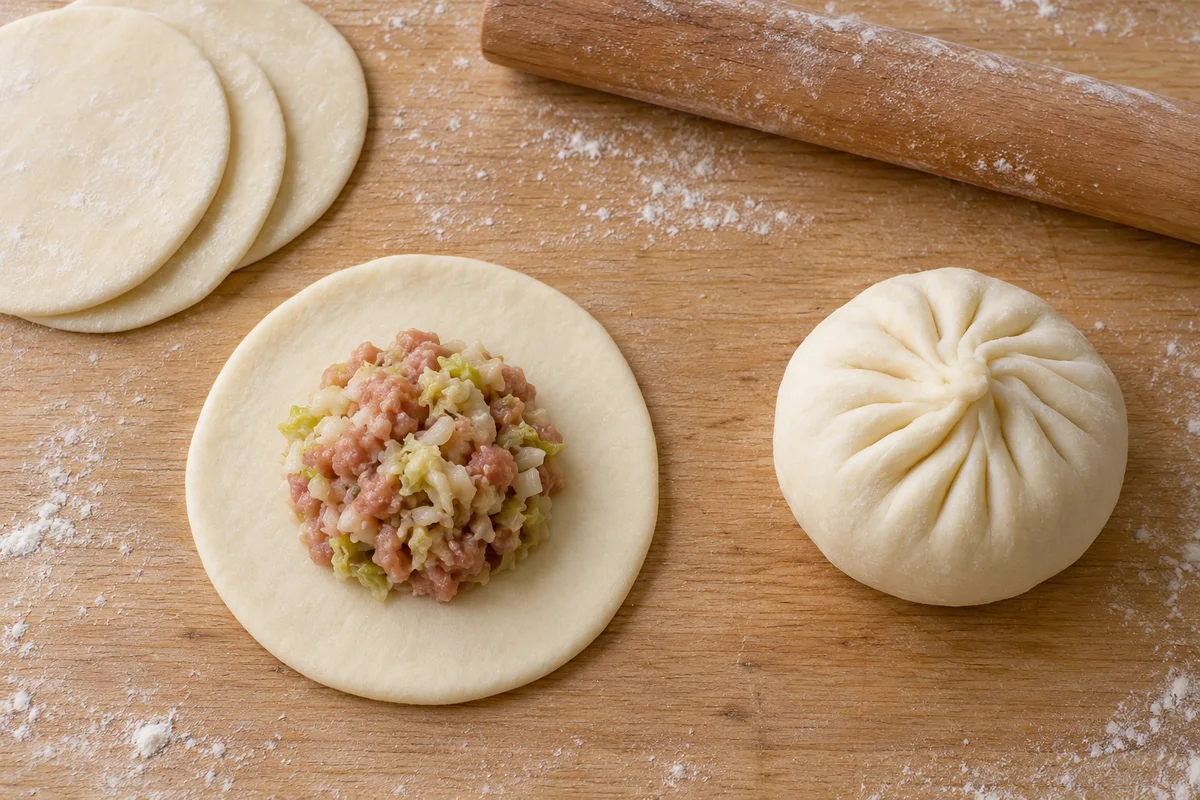
Use the clock to take notes. Use the dough to make decisions.
Mixed
Rough is fine. Look for complete hydration with no hidden pockets of dry flour.
Record: water temperature and flour brandKneaded
The surface should become more even and elastic, without using extra flour simply for polish.
Record: hand or mixer timeFermented
Look for expansion, trapped gas, and a lighter feel. Photograph the state from the same angle.
Record: room and dough temperatureReady to wrap
Keep pieces covered. Roll a thinner rim while preserving enough center dough to carry the filling.
Record: dough weight per bunTwo dough families, two different jobs
Do not make one formula pretend to be every bao.
| Field | Northern home-style baozi | Cantonese dim-sum bun |
|---|---|---|
| Typical goal | Supple wrapper with enough strength for juicy fillings | Very soft, pale, sometimes split-top wrapper |
| Sweetness | Usually restrained | Often noticeably sweeter |
| Leavening study | Yeast-led starting point | May combine yeast, baking powder, and starch |
| First prototype | In scope | Later, as a separate tested system |
This prototype starts with a northern-leaning home-style wrapper. Char siu bao and custard buns will not inherit its numbers automatically.
Quick corrections
Pause before adding more flour.
Dough snaps back
Cover it and let the gluten relax before rolling again.
Dough sticks everywhere
Pause, use a scraper, and dust lightly. Heavy flouring quietly changes the formula.
Wrapper edges crack
Keep divided pieces covered and note whether the dough already felt dry after mixing.
Buns still feel heavy
Check yeast activity, dough temperature, and fermentation state before changing ingredients.
Planned flour comparison
The first controlled test should compare all-purpose, cake, bao/Hong Kong, and bread flour using the same target bun weight. We will record absorption, color, handling, pleat retention, crumb, and next-day reheat—not just “soft” versus “hard.”