Shaping field note · Beginner first
How to pleat baozi
The first goal is a closed bun, not a particular number of pleats. Broad, uneven folds that hold are more useful than a beautiful top that leaks.
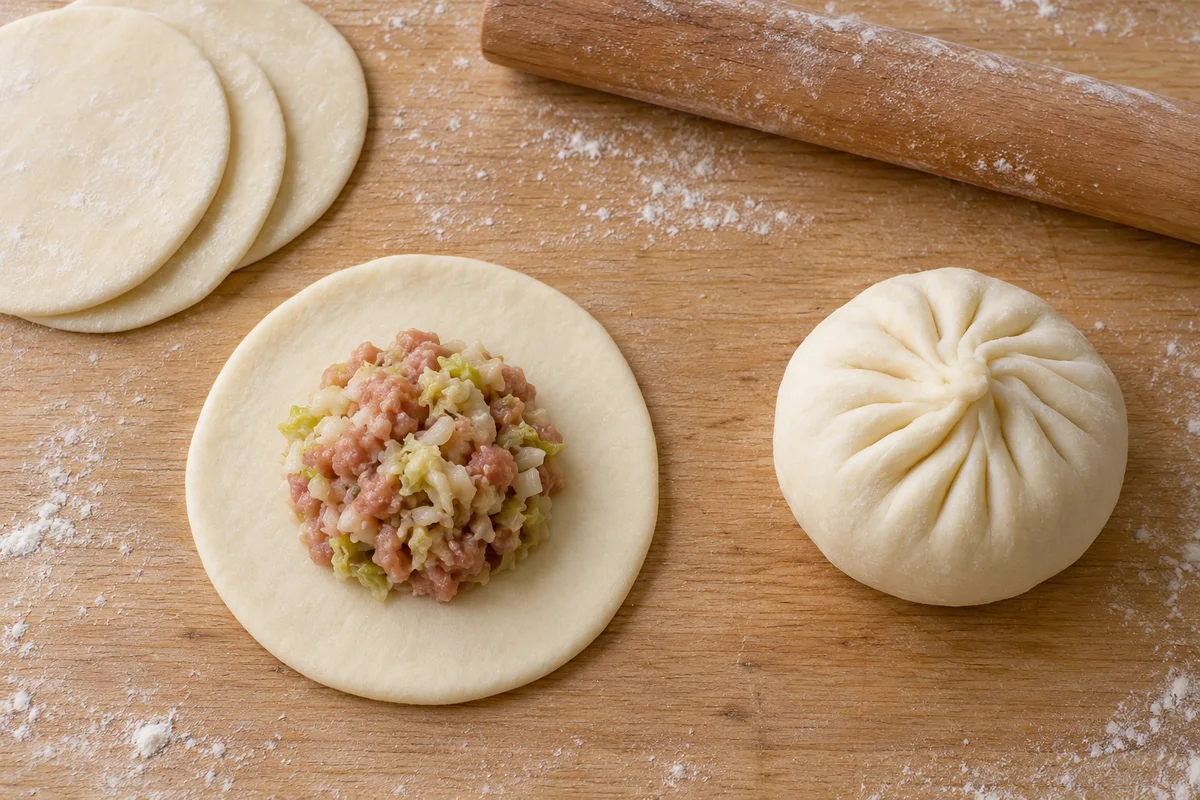
Gather, seal, flip.
Bring the rim together, pinch every opening closed, then place the smooth side up. This teaches filling weight and dough behavior without making appearance the gatekeeper.
Anchor, feed, rotate.
Hold one pinch point, feed a small new fold toward it, and rotate the wrapper. The filling stays below the rim while the opening gets smaller.
The hand rhythm
Six movements, repeated slowly.
- 01
Cup the wrapper
Support the center and keep the rim exposed.
- 02
Lower the filling
Leave a clean, dry ring of dough around it.
- 03
Make an anchor
Pinch one small section and keep it in place.
- 04
Feed a fold
Bring a new section toward the anchor fingers.
- 05
Rotate the wrapper
Move the dough around the filling—not the filling around the dough.
- 06
Close the final gap
Pinch until no opening remains, regardless of pleat count.
When the top will not cooperate
Protect the rim and reduce the load.
Filling touches the edge
Remove a little filling and clean the rim before trying to seal.
Wrapper tears at the base
Leave more thickness in the center and use less filling for the next bun.
Pleats keep springing open
Rest the divided dough briefly and check that the rim is not oily.
The last hole will not close
Switch to a gathered closure. A sealed bun is the successful result.
Read the shaping reference with care
The AI-generated image is an editorial reference, not a recorded sequence or a tested dough result. The written hand movements still need a documented kitchen demonstration.