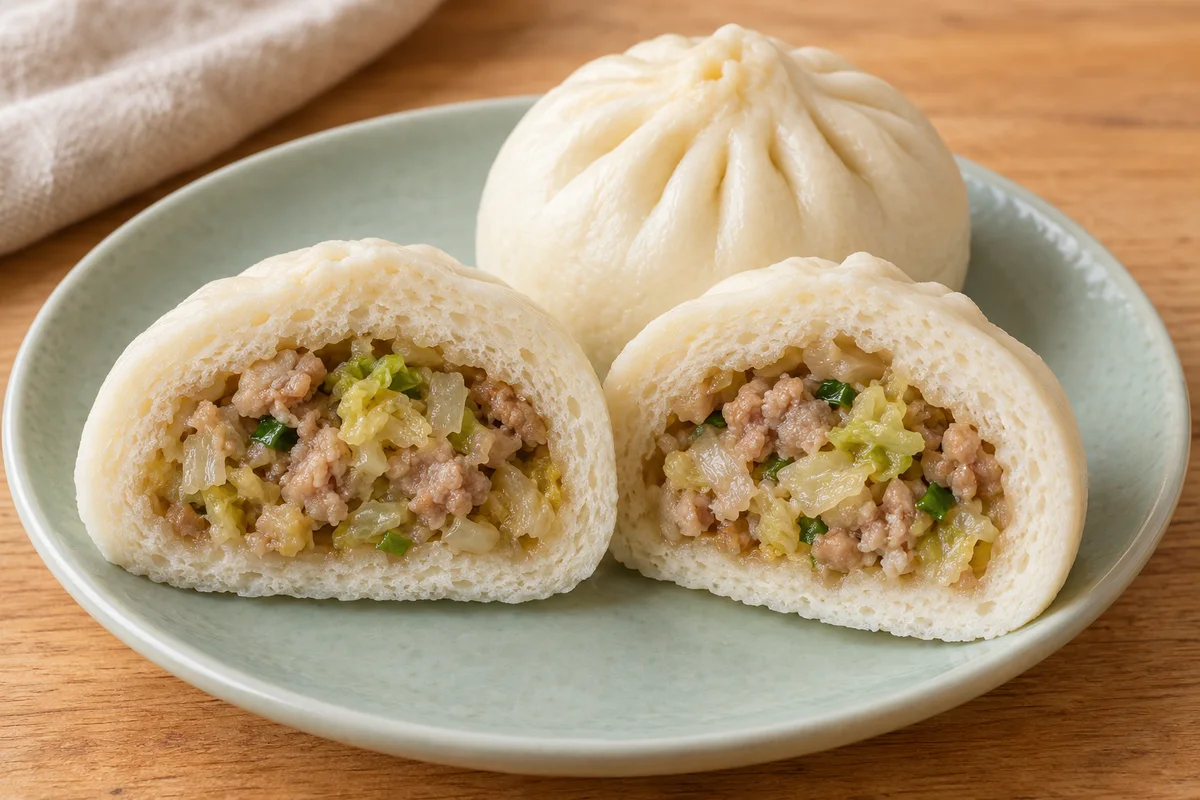
A provisional batch of round, yeasted baozi filled with pork and napa cabbage. This formula is here to be tested and revised—not presented as a finished recipe.
Pork and napa cabbage enclosed in a soft, yeasted wrapper.AI-generated editorial reference
Draft yield12 medium baozi
Documented tests0 batches
Skill focusMoisture + sealing
Steam timeTo be established
Before you cook
The quantities, proofing window, and steaming method below are provisional. Record every change. Keep raw filling cold, avoid tasting it, and verify ground pork reaches at least 160°F / 71.1°C in the center.
These provisional quantities demonstrate the finished recipe experience. They are not yet a kitchen-tested or published recipe.
Showing a 12-bun metric draft.
Dough
Pork & napa filling
Assembly
Draft boundary: Do not serve this worksheet as a finished recipe. Pork filling must reach a verified safe center temperature; the current USDA minimum for ground meats is 160°F / 71.1°C.
What the first test must answer
Six questions before this becomes a recipe.
01
Is the provisional dough hydration comfortable with the selected flour?
02
How much napa cabbage remains after salting and squeezing?
03
What filling weight can a first-time wrapper seal cleanly?
04
What second-proof cue predicts lift without blurred pleats?
05
What steam sequence reliably reaches a safe filling temperature?
06
How does the wrapper feel fresh, cooled, frozen, and re-steamed?